


The landscape of private investigations is changing rapidly due to the overwhelming spread of Fake Media. It wasn’t that long ago that a photo or a piece of video footage was considered the gold standard of proof. Today, you can’t simply take what you see at face value. The rise of online misinformation makes the job of a private investigator much more complicated than it used to be. You’re no longer just looking for a “smoking gun”; you’re often sifting through a mountain of digital deception to find a single grain of truth. Dealing with deepfakes, manipulated metadata, and coordinated misinformation campaigns requires a level of scrutiny that was unnecessary a decade ago.
How False Information Makes Evidence Harder to Find
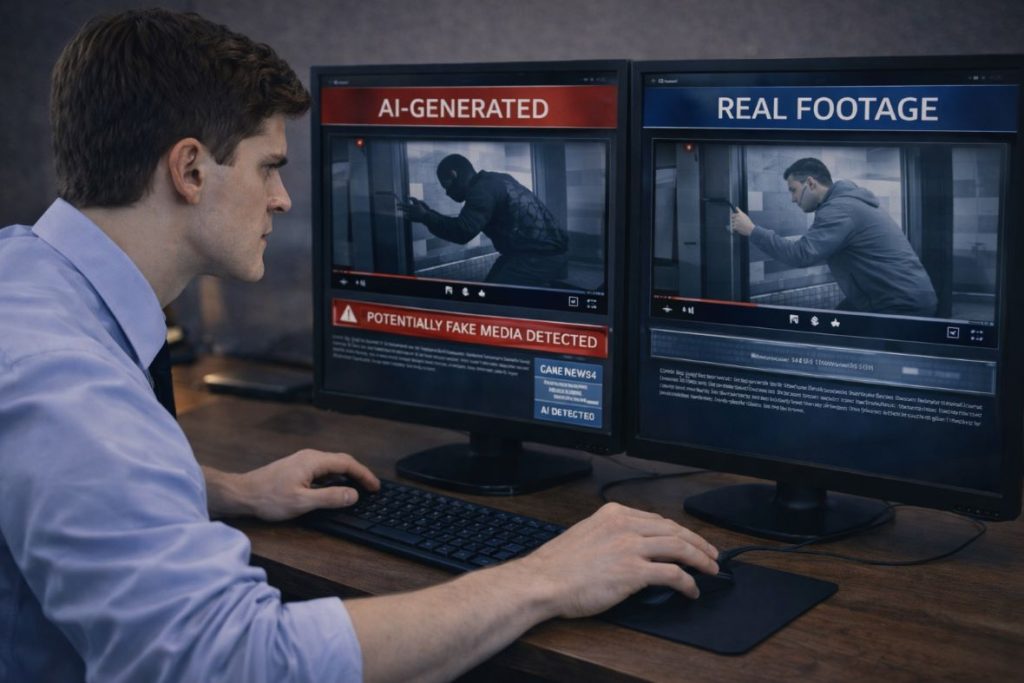
When you start an investigation today, you’re likely to encounter a cloud of confusion created by Fake Media. In the past, the primary challenge for an investigator was physical access to information. Now, the challenge is verifying the authenticity of the information that’s already readily available. The internet is swamped with content that looks real but isn’t. Because digital manipulation tools are easier for people to use now, even an amateur can create a convincing lie using a smartphone app.
Investigation services in Melbourne must now spend hours, sometimes days, verifying whether a photo or video is real. This process involves more than just looking for glitches in an image. You have to analyse the lighting, shadows, and pixels to ensure nothing has been added or removed. This extra layer of verification slows down the entire process. Instead of moving directly to the next phase of a case, you’re stuck in the “fact-checking” phase. This holdup can be frustrating for clients who want quick results, but skipping this step is not an option.
In the world of online research, bots and trolls frequently spread false narratives. If you’re conducting a background check or looking for a missing person, you might find dozens of social media posts that point in the wrong direction. The subjects themselves sometimes create these red herrings to throw people off the trail. Other times, they’re just part of the general noise of the internet. Sorting through this data requires specialised skills beyond traditional PI work.
The Risk of Using Bad Data in Legal Cases
What happens when an investigator accidentally uses fake info? The consequences are severe. If you present a manipulated photo as evidence in a legal dispute, it can hurt a person’s reputation or cause you to lose a court case entirely. Judges and lawyers have no patience for unverified data. If your evidence is proven false, your credibility as a professional is destroyed instantly. In some instances, using insufficient data can lead to lawsuits against the investigator or the client. It’s a risk that nobody should take.
Ways Private Investigators Stay Ahead of Fake Content
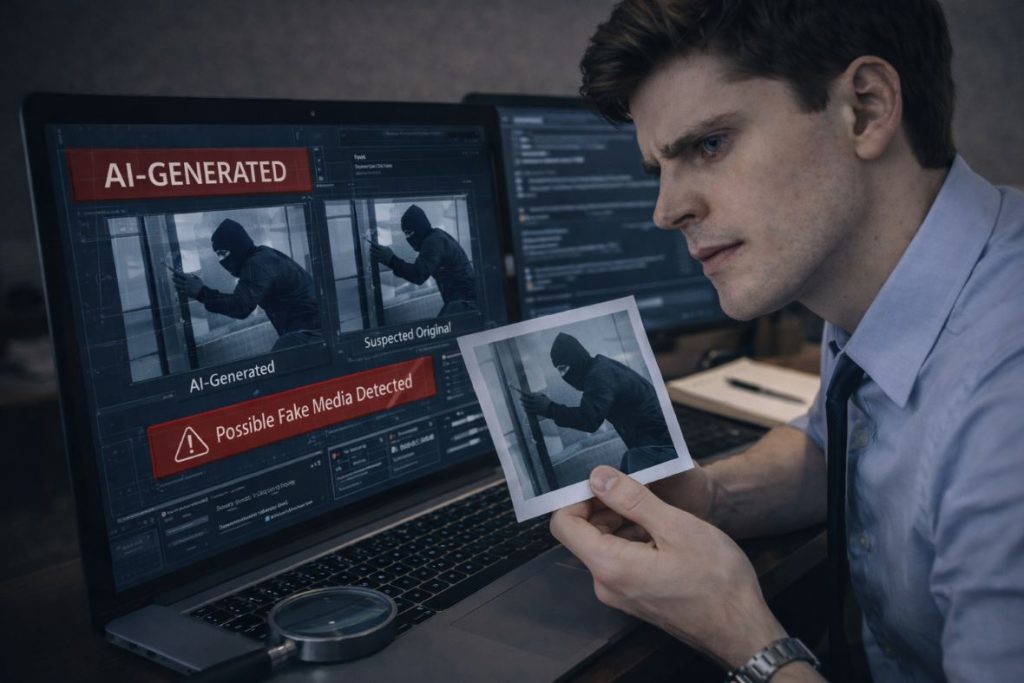
To navigate this messy environment, you have to use tools and skills that stay one step ahead of the deceivers. Professional experts don’t just “Google” a person and hope for the best. You need to rely on specialised software that can detect “photoshopping” or digital alterations that the human eye would miss. This involves examining the raw code in a file, often called metadata, to determine when and where it was created.
Verifying sources is essential. If a claim comes from a new social media account with no established history, it raises a red flag. It is important to corroborate information across multiple independent sources to build a solid case and avoid relying on falsehoods.
Staying ahead requires continuous education. As Fake Media creation tools evolve, investigators must proactively learn new detection methods to avoid being fooled by emerging manipulation techniques.
Verifying Photos and Social Media Posts
When you’re looking at a post on a phone screen, you can’t trust it without proof. You have to follow specific steps to check the date and location. For example, looking at the background of a photo for landmarks or weather patterns can tell you if it was actually taken when the user claims. If a post says it’s from a sunny day in Sydney, but the local weather records show it was raining, you’ve caught a lie. These small details are the keys to breaking through digital deception.
Careful Work Is the Path to Truth
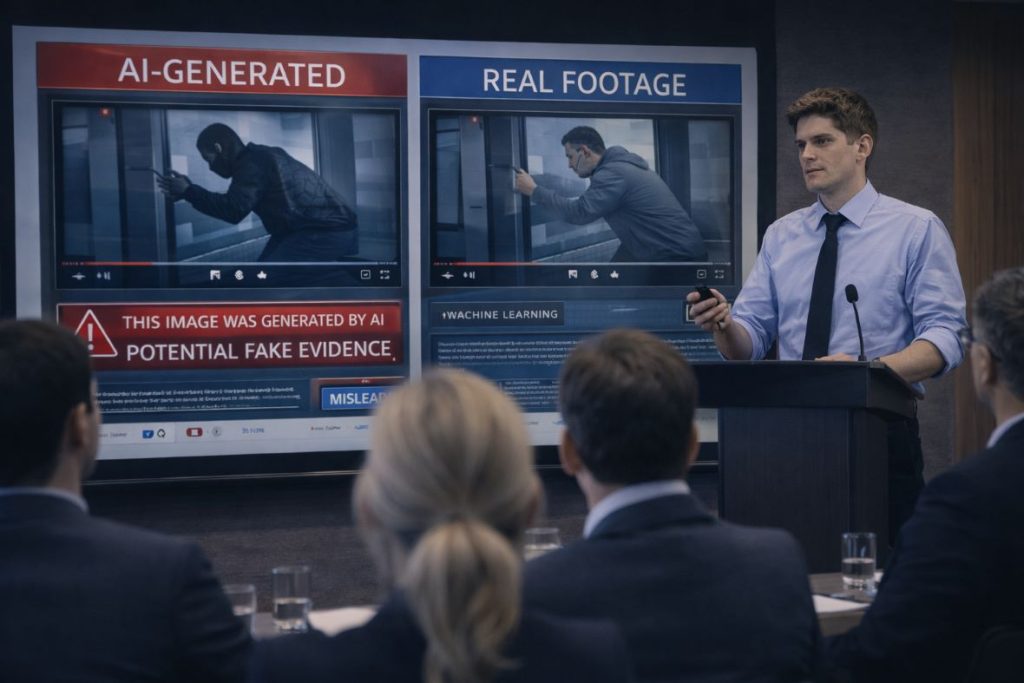
The rise of Fake Media has undoubtedly made the world of private investigator Melbourne more complex, but it hasn’t made finding the truth impossible. It just means that the bar for what counts as “evidence” has been raised higher than ever. You can’t rely on luck or a few quick searches anymore. Success in this field now depends on a combination of old-fashioned persistence and modern technical expertise.
The only way to handle the threat of false information is through careful, methodical work. Real experts know how to peel back the layers of a digital lie to reveal the facts underneath. When you’re looking for answers in an era of misinformation, you need someone who knows how to tell the difference between a high-tech fabrication and a hard truth. Finding the truth takes time, the right tools, and a very sharp eye for detail. Don’t settle for “probably” when you need to be certain.
Frequently Asked Questions
Can fake media ruin a private investigation?
Yes, it can. If an investigator relies on a single piece of false information, it can lead the entire case down a dead end. This wastes time and money. It also makes the final report useless for legal or personal decisions. That’s why professional verification is so necessary.
How do investigators know if a video is fake?
Experts use technical analysis to find inconsistencies. They look for unnatural movements, blurred edges around faces (familiar in deepfakes), and audio that doesn’t perfectly match the lip movements. They also check the file’s digital signature to see if it has been edited by software.
Is it legal to use fake media in court?
No. Knowingly presenting false evidence is illegal and can lead to perjury charges or contempt of court. Even if it’s an accident, the judge will likely throw the evidence out. This is why a private investigator must be able to prove the “chain of custody” and the authenticity of every file they provide.


