


When you’re dealing with a situation where the truth seems just out of reach, understanding human behaviour becomes your strongest asset. In private investigations, recognising behavioural red flags builds trust in your expertise and reassures clients of your thoroughness.
These red flags are often the earliest indicators that someone is under pressure, concealing information, or reacting defensively to a sensitive topic. Investigators don’t rely on a single nervous gesture or moment of discomfort. Instead, they observe how people behave when the stakes rise, when questions become personal, and when reality challenges the story they want to present.
Professionals don’t just look for a single nervous tic and call it a day. Instead, they watch how a person reacts when the stakes are high, and they’re forced to confront brutal realities. By paying attention to how people carry themselves, how they speak, and how their bodies react when they think no one is noticing, an investigator can peel back layers of deception. It’s all about catching those small, involuntary cracks in a carefully constructed facade.
Understand the Baseline to Identify Suspicious Changes

Before you can spot something wrong, you have to know what “right” looks like for that specific individual. This process, known as baselining, helps you feel more competent by understanding normal behaviour. It involves observing a person’s relaxed, everyday actions when they aren’t under any perceived threat. You might notice how fast they usually talk, how often they blink, or where they naturally rest their hands during a casual conversation. Without this starting point, you might mistake a naturally jittery person for someone who is lying, but establishing a baseline boosts your confidence in making accurate judgments.
During private investigations, an operative will spend time establishing this baseline by asking simple, non-threatening questions. Once the person is comfortable, the investigator introduces more sensitive topics. This is when the magic happens. If the subject suddenly shifts from speaking at a regular pace to talking incredibly fast, or if their steady eye contact suddenly starts darting around the room, it’s a signal. These deviations are the breadcrumbs that lead to the truth.
Small physical changes are often the most telling. You might see a person who was previously expansive and open suddenly cross their arms or start fidgeting with a ring. These aren’t just random movements; they’re responses to internal stress. When someone moves away from their established baseline, it doesn’t always mean they’re guilty of a crime, but it definitely means the topic at hand has caused a psychological shift that warrants closer inspection.
Watch for Verbal Shifts and Speech Patterns
Many people wonder, “Can speech patterns reveal lying?”
Verbal behaviour is often more revealing than body language if you know what to listen for.
When someone feels cornered, their speech frequently changes. They may repeat questions to stall, over-explain simple answers, or rely heavily on filler words like “um,” “ah,” or “you know.” These patterns often appear when cognitive load increases, meaning the person is actively managing information rather than recalling it naturally.
Another strong indicator that investigators listen for is pronoun avoidance. Someone speaking truthfully will usually say, “I didn’t do it.” Someone attempting to distance themselves may say, “That didn’t happen” or “Who would even do something like that?”
This subtle shift answers a common question: “Why do people avoid saying ‘I’ when lying?” It’s an unconscious attempt to separate themselves from the action.
Notice Physical Cues and Body Language Stress
Your body often betrays you before your words do. When stress levels rise, the human nervous system frequently triggers self-soothing behaviours.
When pressure rises, the nervous system activates self-soothing behaviours. These include touching the neck, rubbing the ears, smoothing hair, or adjusting clothing. These actions aren’t planned; they’re instinctive responses to anxiety.
Blocking behaviours are also common. Someone might place an object between themselves and the investigator or subtly turn their body away. These actions often occur when someone feels threatened by a line of questioning, helping answer “what does defensive body language look like?”
Investigators don’t treat these signals as proof. Instead, they use them as indicators of where to dig deeper.
Common Behavioural Red Flags in Domestic and Corporate Cases

In both personal and professional settings, these red flags manifest in distinct ways. In domestic cases, such as suspected infidelity, the signs often revolve around sudden changes in privacy habits or unexplained defensiveness. In a corporate environment, professional workplace misconduct investigations usually reveal clues, such as a sudden change in an employee’s work hours or an unusual interest in files outside their department.
However, it’s vital to remember that a single sign iisn’ta smoking gun. Professionals look for clusters. A cluster is a group of at least three Behavioural Red Flags appearing at the same time or in a short sequence. For example, if someone denies a theft while simultaneously touching their throat, stepping back, and stuttering, that’s a cluster. This combination makes it much more likely that the person is being untruthful.
Whether the case involves finding a missing person in Australia or uncovering fraud, the objective remains the same: look for the patterns. People are creatures of habit, and when they deviate from those habits while being questioned, they’re essentially waving a flag that says, “Look closer here.” Recognising these patterns encourages patience and curiosity, as it’s the consistent deviations that reveal the truth rather than any single word or gesture. This approach helps investigators feel more confident in their analytical skills and reassures them that persistence pays off.
Identify Defensiveness and Avoidance Tactics
Aggression is a classic defence mechanism. If you ask a simple question and the person responds by attacking your character or questioning your right to ask, they’re likely trying to deflect. They want to make you the problem so you’ll stop looking at what they’re hiding. This “flip the script” tactic is a major red flag. Instead of answering the question, they’ll complain about the “accusatory tone” or bring up unrelated past grievances to muddy the waters.
Uncovering the Truth with Professional Insight
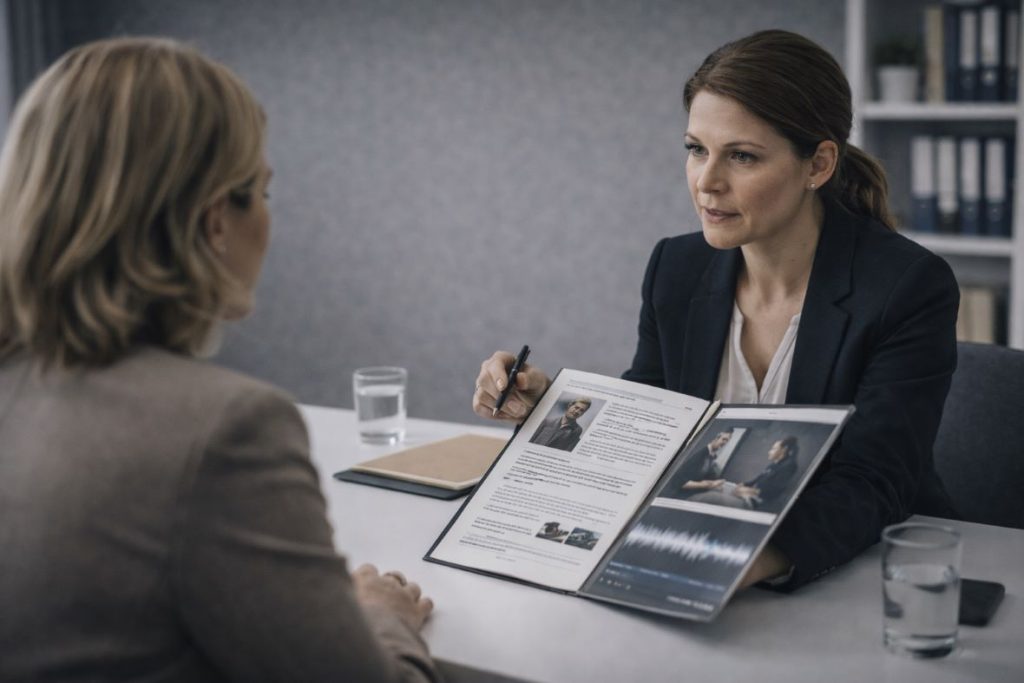
Detecting behavioural red flags offers insight into what motivates people and where pressure points exist. While it’s tempting to believe you can spot deception instantly, professionals understand that behaviour alone never tells the full story.
This is why private investigations combine behavioural analysis with verified facts. Investigators ask, “Do behavioural signs match the evidence?” and “Does the story hold up when checked?”
Surveillance, records, timelines, and documentation are used to confirm or challenge behavioural observations.
Experienced investigators know the difference between nerves and deception. By combining behavioural science with objective evidence, they move beyond suspicion and toward clarity, safely, ethically, and effectively.
Frequently Asked Questions for Detecting Behavioural Red Flags
What is the most common red flag encountered? The most telling sign isn’t a specific gesture like touching the nose. Instead, it’s any significant change from the person’s baseline behaviour. If a typically loud person becomes quiet, or a still person begins to fidget,that’ss the most reliable indicator that something is being hidden or that the topic is causing distress.
Can body language alone prove that someone is lying? No, body language isn’t a lie detector. It only measures stress, discomfort, and cognitive load. A person might be nervous because an investigator, even if they’re innocent, is interviewing them. Because of this, professionals use body language as a guide to know where to dig deeper rather than as final proof of guilt.
How do private investigations help verify these signs? Investigators don’t rely solely on intuition. They use expert fact-finding services to support their views. If a person shows signs of stress when asked about their whereabouts, the investigator uses surveillance and records to verify if the person’s story matches reality. It’s the combination of behavioural analysis and hard evidence that solves the case.


