


When you think of a modern investigator, you might imagine someone following a car or sitting in a dark room with a camera. While those methods still matter, much of today’s detective work happens on a screen. Every time you send an email or receive a text, you leave behind a trail of data. For private investigators, these tiny markers are often more valuable than a physical witness.
Every email sent and every text received leaves a trail. That leads many people to ask, “Do emails and texts really leave a trace?” and “Can messages actually reveal where someone has been?” In many cases, the answer is yes. Because phones and email accounts travel everywhere with us, they quietly record patterns of behaviour that are far more reliable than memory or hearsay.
Email Tracking and SMS Tracing have become essential tools for solving cases ranging from corporate fraud to personal disputes. Because people carry their phones everywhere, their digital footprints act as a constant record of where they’ve been and who they’ve contacted. You’ll find that understanding these digital threads is the key to uncovering the truth in an era where most secrets are kept in a pocket or an inbox.
How Private Investigators Monitor Digital Messages
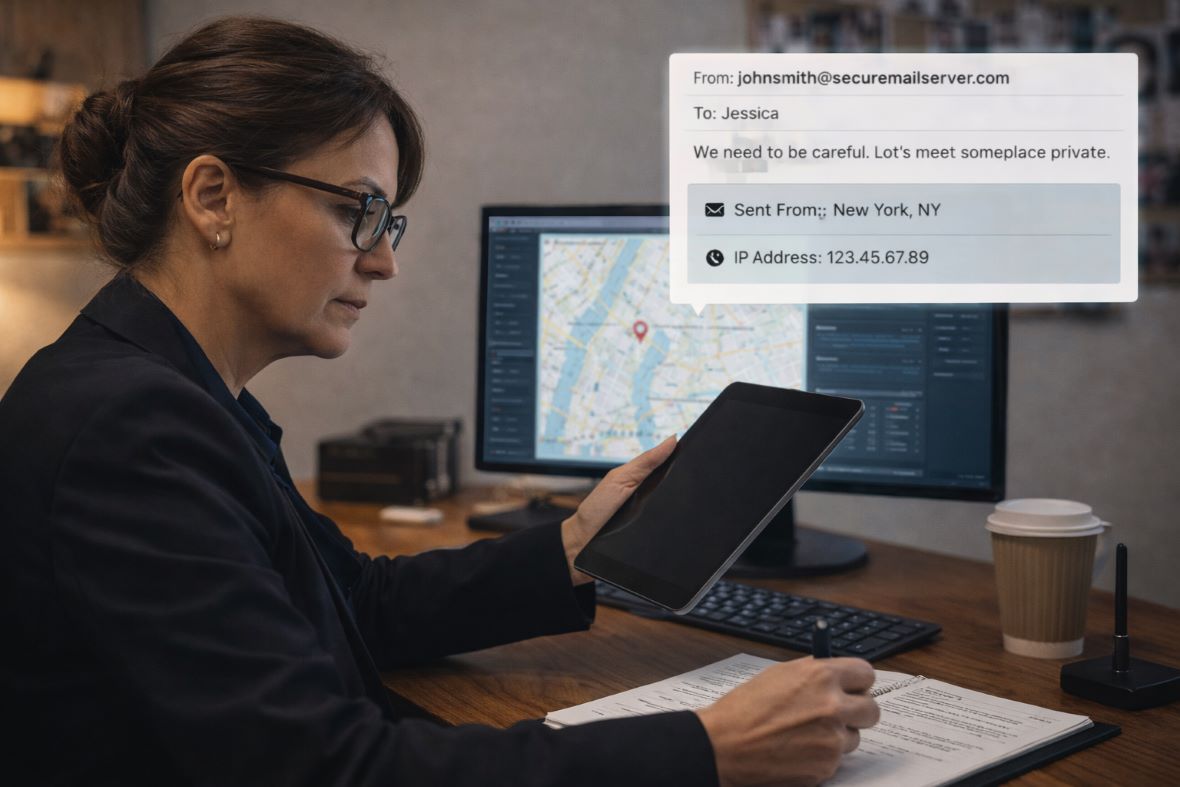
A modern private investigator doesn’t guess what’s happening behind the scenes. Instead, they look for hard proof stored in digital records. People often wonder, “How do investigators find information from emails or SMS?” The process isn’t about indiscriminate spying. It’s targeted, lawful, and designed to answer a specific question.
Investigators monitor how messages move, when they’re opened, and how frequently two parties communicate. Patterns matter. A sudden spike in late-night texts or emails accessed from unexpected locations can tell a story on its own. This kind of monitoring helps answer common doubts like, “Is digital communication really traceable?” without relying on speculation.
Legality is central to every step. Private investigators cannot hack accounts or secretly access private messages. Instead, they work within strict legal boundaries. For example, monitoring may be lawful on company-owned devices, shared accounts, or situations where proper consent or authority exists. The goal is to produce a clear, documented communication history that can stand up to scrutiny rather than collapse under legal challenge.
Because digital evidence accumulates quickly, these methods often resolve cases faster than traditional surveillance alone. Instead of weeks of observation, investigators may identify who someone is communicating with, how often, and from where in a much shorter time frame.
Email Tracking Methods for Reliable Evidence
Email is one of the most common ways people share information, making it a goldmine for investigators. To achieve the best results, professionals use methods such as tracking pixels. These are tiny, invisible images embedded in an email. When the recipient opens the message, the pixel sends a notification back to the sender. This tells the investigator exactly when the email was opened. It often provides the device’s IP address, which can reveal the person’s approximate location at that moment.
Read receipts are another standard tool. While some users can turn these off, advanced tracking software can bypass these settings to confirm delivery and engagement. This is incredibly useful in legal disputes where someone claims they never received a specific document or notice. In personal cases, such as suspected infidelity or hidden assets, knowing that a person is checking their mail from a particular hotel or a secret apartment can be the “smoking gun” needed to prove a case. Because these logs are automated, they provide a reliable, third-party record that’s difficult for a subject to deny.
SMS Tracing and Verifying Mobile Communication
Tracing text messages takes a different approach but is just as important. Investigators work to verify the identity of the person behind a number. They don’t just look at the text on the screen; they analyse the metadata.
By compiling this information, investigators can build a minute-by-minute timeline of communication. This often answers questions like, “Can text message timestamps prove someone was lying?” When timelines don’t align with someone’s stated whereabouts or story, the inconsistencies become difficult to explain away.
This includes the exact timestamps of when a message was sent and received. By compiling these logs, an investigator can build a minute-by-minute timeline of events. This timeline can prove whether someone lied about their whereabouts or was in contact with an unauthorised person during a specific time window.
Identity verification is crucial. Many people try to hide behind burner numbers or messaging apps, which leads to another common concern: “Can burner numbers or fake apps be traced?” While nothing is guaranteed, professionals can often link activity back to real individuals by combining SMS tracing with phone number verification and supporting evidence.
You have to remember that private investigators must follow privacy laws, especially when it involves mobile data. They often combine SMS tracing with other methods, such as professional phone owner verification, to ensure they have the right person. Verifying the sender’s identity is vital because people often use burner apps or fake names to hide their tracks. A professional can peel back these layers of digital disguise to show who was actually holding the phone. This level of detail helps create a complete picture of a subject’s digital life. This layered approach helps confirm who was actually holding the phone.
Why Digital Evidence Matters in Modern Investigations
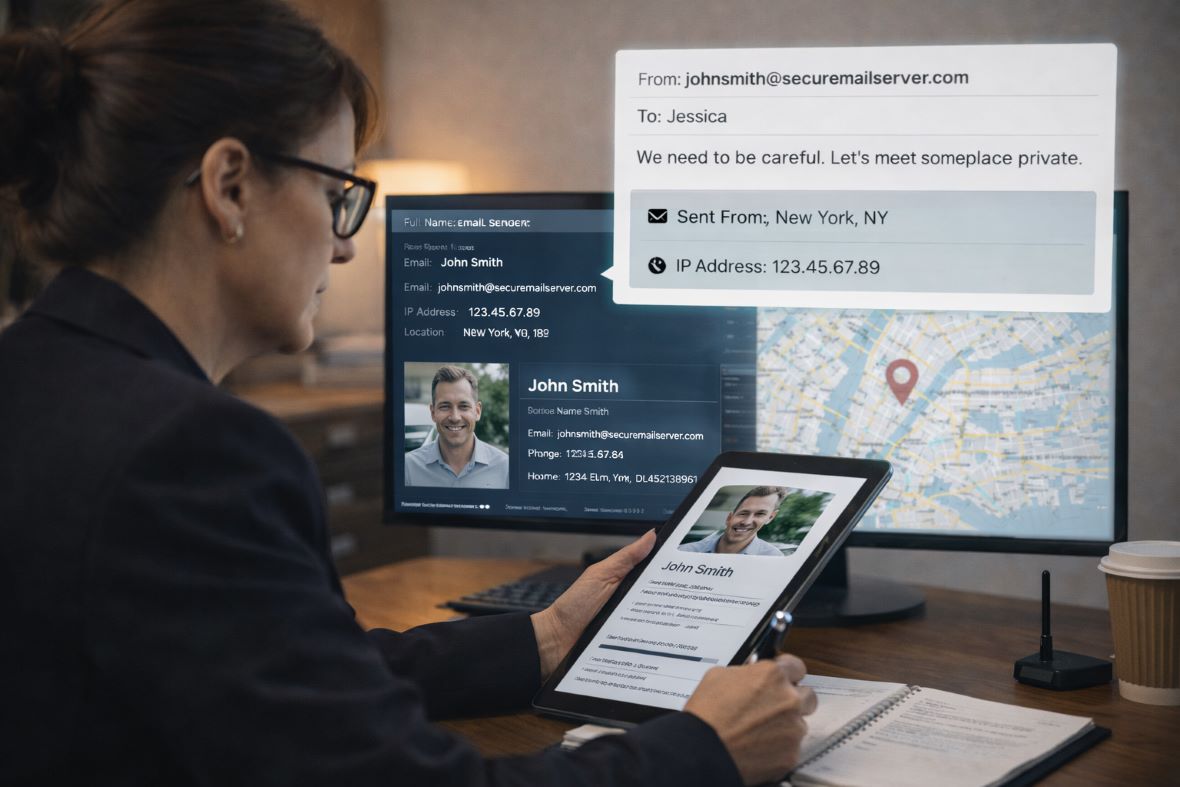
In the past, an investigation might rely on what a witness saw or heard. The problem is that memories fade and people lie. Complex data doesn’t have those flaws. Digital evidence, such as IP addresses, server logs, and delivery timestamps, provides a factual backbone for any case. When you have a log showing that an email was sent from a specific office at 2:00 AM, that’s much more powerful than a neighbour’s vague recollection. It’s objective, it’s searchable, and it’s highly persuasive in a professional or legal setting.
This type of evidence holds up better than word of mouth because it’s verifiable. If a case goes to a lawyer or a courtroom, digital records are often the most respected form of proof. They present a transparent chain of events that is difficult to dispute. For instance, Magnum Investigations’ surveillance expertise frequently combines physical monitoring with these digital records to provide a 360-degree view of a situation. The combination of seeing someone at a location and having digital proof of their communication from that same spot creates an airtight case.
Furthermore, digital evidence is often permanent. Even if someone attempts to remove a message or an email, they usually leave behind traces on servers or in the metadata of other devices. A skilled investigator knows where to look for these “ghosts” of data. This ability to recover and document information that someone tried to hide is why digital tracing is so effective. It gives you the confidence that the truth isn’t just someone’s opinion, but a matter of recorded fact.
The Power of Digital Traces
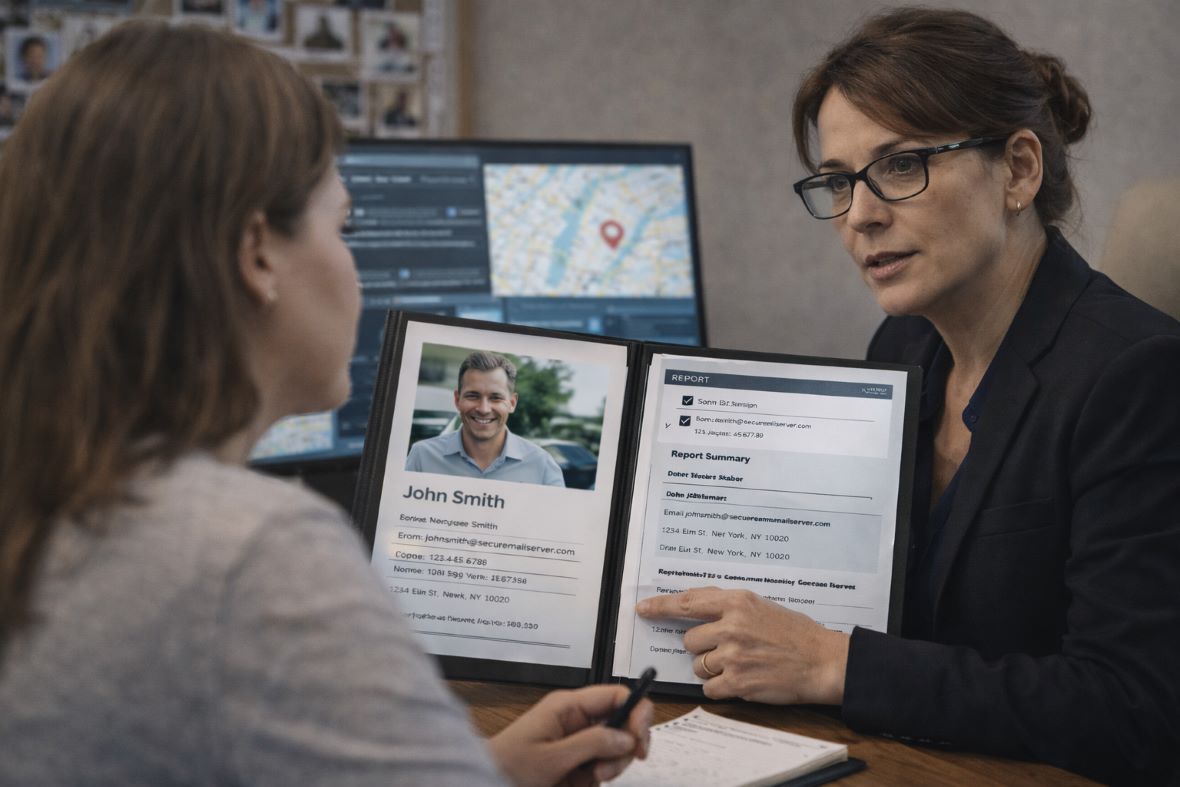
Email Tracking and SMS Tracing have changed the way we look at evidence. They provide a level of detail and accuracy that was impossible just a few decades ago. By following the digital breadcrumbs left behind in our daily communications, investigators can find answers that were once hidden. Whether you’re dealing with a business problem or a personal matter, these tools offer the clarity you need to move forward. Coping with these technical processes on your own is risky and often ineffective. To ensure results that are both accurate and legally sound, the best move is to rely on experts who understand the nuances of the digital world. Hiring a professional gives you the peace of mind that comes with knowing the truth is backed by complex, undeniable data.
FAQ: About Email Tracking and SMS Tracing
Is it legal for a private investigator to track my emails or texts?
Yes, but only under specific conditions. Investigators must follow all privacy laws and regulations. They typically use these tools on devices or accounts where there’s a legal right to monitor, such as a company-owned computer or with a client’s permission in specific legal contexts. They cannot “hack” into private accounts without legal authorisation.
How accurate is the location data from an email or message?
It’s generally exact, but it depends on the technology used. An IP address can usually narrow down a location to a specific city neighbourhood. When combined with other data, such as Wi-Fi network information, it can be even more precise. It’s an excellent tool for confirming if a person’s stated location matches where they actually were.
Why should I hire a pro instead of using a tracking app myself?
Many “do-it-yourself” tracking apps are unreliable or even illegal. A professional investigator knows how to collect evidence that’s admissible in court. They also have access to higher-quality software and learn how to interpret complex data. Hiring an expert ensures the investigation remains discreet and in compliance with the law, protecting you from potential legal trouble.
