


Across Australia, more people are hiring private investigators to verify the truth, protect themselves, and gather reliable evidence. But with growing public interest comes a common question: What can a Private Investigator legally do? With strict state laws and rising concerns around privacy, knowing the limits of investigative work is essential for anyone considering hiring a PI.
What a Private Investigator Can Legally Do
Private investigators work under licences issued by state and territory governments. Because of these regulations, they must follow strict rules that protect the public.
Legal private investigators can do the following:
- Conduct physical surveillance in public places
- Gather video and photographic evidence where lawful
- Perform background checks using legal sources
- Search for missing people or debtors
- Verify employment, business operations, and personal details
- Monitor online activity that is publicly available
- Locate assets through legal databases
- Serve legal documents
- Conduct interviews and take statements
- Use GPS trackers only when the vehicle owner has given consent
These activities are legal because they respect privacy laws and avoid unauthorised access.
What a Private Investigator Cannot Legally Do
Because privacy laws are strict, there are clear limits on investigation techniques.
A PI cannot:
- Hack phones, emails, or social media accounts
- Plant listening devices inside homes or vehicles
- Install hidden cameras in private places
- Track someone’s phone without permission
- Access bank accounts or private financial records
- Impersonate police or government workers
- Trespass on private property
- Obtain phone records without consent
- Force anyone to speak or cooperate
These actions are illegal in every Australian state and can lead to serious penalties. Therefore, hiring a licensed PI protects you from accidentally breaking the law.
State-by-State Investigator Laws in Australia (Expanded — With ALRC Guidance)

Australia does not have one national law governing private investigators.
Instead, each state issues its own licences and rules, but all investigators must still comply with federal privacy principles outlined by the Australian Law Reform Commission (ALRC).
According to the ALRC (Report 108, Chapter 44 – Private Investigators), licensed investigators must operate under strict privacy obligations, are not exempt from privacy laws, and cannot collect information unlawfully. The ALRC also highlights that investigators must have a legitimate purpose, must avoid “unreasonable intrusion,” and must follow both state licensing rules and Commonwealth privacy protections.
Below is the updated state-by-state breakdown with added legal context:
New South Wales (NSW)
- PIs must hold a CAPI Licence (Commercial Agents and Private Inquiry Agents).
- The ALRC notes that NSW strongly regulates surveillance devices, meaning investigators must avoid using illegal listening or tracking devices.
- Surveillance is allowed only in public locations or places where there is no reasonable expectation of privacy.
- Trespassing, secret audio recordings in private areas, and hacking are strictly prohibited.
- NSW also requires strict record-keeping so any collected evidence can be traced and verified.
Victoria
- Licences are issued under the Private Security Act 2004.
- As the ALRC outlines, Victorian law protects individuals from unreasonable intrusion, meaning investigators must be extra careful when gathering personal information.
- Surveillance is legal only in public spaces.
- Investigators cannot film inside homes, private offices, or fenced properties without consent.
- Victoria places strong emphasis on privacy, documentation, and limiting the collection of unnecessary personal data.
Queensland
- Private investigators need a Security Provider Licence.
- The ALRC notes that Queensland aligns closely with Commonwealth privacy principles, particularly around the lawful collection of personal information.
- Tracking devices may be used only if the owner of the vehicle gives permission.
- Investigators must not obtain private phone or financial records, consistent with ALRC’s warnings about unlawful information-gathering.
Western Australia
- Governed by the Security and Related Activities (Control) Act.
- Surveillance must remain non-intrusive, consistent with ALRC’s recommendations against “unreasonable surveillance.”
- Investigators must avoid collecting sensitive information unless it is necessary for the case.
- WA also requires a clear identification of purpose before any investigation begins.
South Australia
- Licences issued under the Security and Investigation Agents Act.
- Surveillance cannot involve trespassing or interference, aligning with ALRC guidance that investigators must “avoid collecting information unlawfully or unfairly.”
- SA law also requires strict separation between legal surveillance and prohibited conduct like covert audio recording in private spaces.
Tasmania
- PIs are regulated under the Security and Investigations Act.
- Tasmanian rules strongly mirror ALRC privacy expectations, meaning investigators must respect data minimisation — only collecting what is necessary.
- Surveillance must be lawful and cannot involve hidden devices inside private homes or vehicles.
Northern Territory
- Licences fall under the Private Security Act 1995.
- Covert surveillance must follow strict limitations, similar to ALRC guidance that private investigators must avoid “highly intrusive” monitoring.
- NT laws reinforce the need for transparency in how evidence is obtained, especially when cases involve family disputes.
Australian Capital Territory (ACT)
- The ACT does not have a dedicated PI licence system.
- However, investigators must still follow federal laws, including:
- The Privacy Act 1988
- The Surveillance Devices Act 2004
ALRC recommendations for ethical collection of personal information
- The ALRC emphasises that ACT investigators remain fully bound by Commonwealth privacy obligations and cannot rely on any exemptions.
Why State Differences Matter
Because each state sets its own licensing rules—but all follow Commonwealth privacy protections—professional investigators always operate according to the laws of both the state and the federal system.
The ALRC made it clear:
- Private investigators must not breach privacy laws
- They cannot claim exemptions or special privileges
- All evidence must be collected legally and ethically
This is why hiring a licensed, experienced PI is essential. Unlicensed or untrained individuals can easily break the law and make evidence unusable.
How Private Investigators Collect Evidence That Stands Up in Court
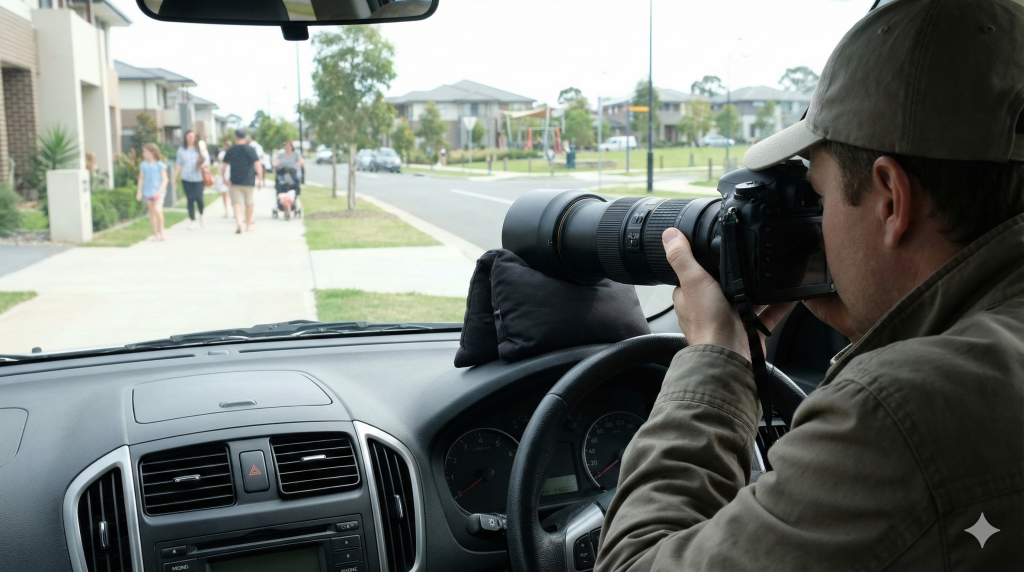
Courts in Australia require evidence to be gathered lawfully. Therefore, anything obtained illegally may be rejected. Private investigators understand these rules and follow strict procedures.
For evidence to be accepted, it must:
- Be collected legally
- Be documented with dates and times
- Be captured in public or consented spaces
- Avoid privacy breaches
- Avoid misleading or manipulated material
- Be backed by investigator records or sworn statements
Courts often prefer PI evidence because it is objective, factual, and professionally documented. This gives clients a major advantage in family, civil, insurance, and workplace cases.
Why Hiring a Licensed PI Protects You
Trying to collect evidence yourself can lead to accidental offences, especially with surveillance or digital data. A licensed private investigator knows exactly what is allowed, and more importantly, what is not. Because of this, you stay protected while still getting the information you need.
The right investigator gathers facts safely, quickly, and legally—giving you confidence and peace of mind.


